Quick support from trusted insurance professionals Call +1 713-777-2886 today! |
Call +1 713-777-2886
Call +1 713-777-2886
Quick support from insurance professionals Call +1 713-777-2886 today! |


Table of Content
Title

Let AZ Insurance Help You
Find Affordable Coverage
Connect with our experienced team today & get reliable, affordable insurance designed around your needs.
Contact Us!

Let A-Z Auto Insurance Help You Find Affordable Coverage
Connect with our experienced team today & get reliable, affordable insurance designed around your needs.
Contact Us!
Is General Liability Insurance Required in Texas? What Businesses Really Need to Know
Is General Liability Insurance Required in Texas? What Businesses Really Need to Know
Is General Liability Insurance Required in Texas? What Businesses Really Need to Know
Is General Liability Insurance Required in Texas? What Businesses Really Need to Know
Is General Liability Insurance Required in Texas? What Businesses Really Need to Know
Reviewed by A-Z Insurance Agency, licensed in Texas, serving Houston since 2003.
A client asks for proof of insurance, a landlord will not hand over the keys without it, or a general contractor says you cannot step on the site until you send a certificate. Suddenly you are wondering whether Texas law actually forces you to carry general liability, or whether everyone is just asking. Since 2003, A-Z Insurance Agency has walked thousands of Houston business owners through this exact question, so here is the straight answer.
Quick Answer: No, Texas has no blanket law requiring most businesses to carry general liability insurance. In practice it is close to mandatory anyway, because client contracts, commercial leases, general contractors, vendor portals, and certain licensed trades all require proof of coverage before you can work, sign, or keep your license.
Key Takeaways
Texas does not legally require most businesses to carry general liability insurance as a condition of operating.
The Texas Department of Insurance regulates the coverage but does not mandate that you buy it.
Contracts, commercial leases, general contractors, and vendor portals routinely require it before you start.
Some licensed trades, including electrical and air conditioning contractors, must carry it to keep a state license active.
Without it, any injury or property damage claim, plus the legal defense, comes straight out of your own pocket.
Getting covered is fast, and you can often walk away with a certificate of insurance the same day.
In This Guide
Does Texas law require general liability?
When general liability becomes required anyway
Licensed trades that must carry it
What happens if you skip it
What general liability covers and does not cover
Frequently asked questions
Does Texas Law Require General Liability?
The short answer is no. Texas has no blanket state law that forces most businesses to carry general liability insurance simply to operate. The Texas Department of Insurance sets the standards that commercial general liability policies follow, but it does not require you to buy one to do business in the state.
That surprises a lot of owners, because it feels required. The reason it feels that way is that almost everyone you work with makes it required, even though the state does not. What the law leaves optional, the market treats as the cost of doing business.
There is an important difference here from auto insurance. Texas does require liability coverage to drive a car legally. It does not extend that same mandate to running a business. If you are sorting out which policies the law forces on you versus which ones the people around you force on you, our guide on the difference between personal and commercial insurance is a good place to start.
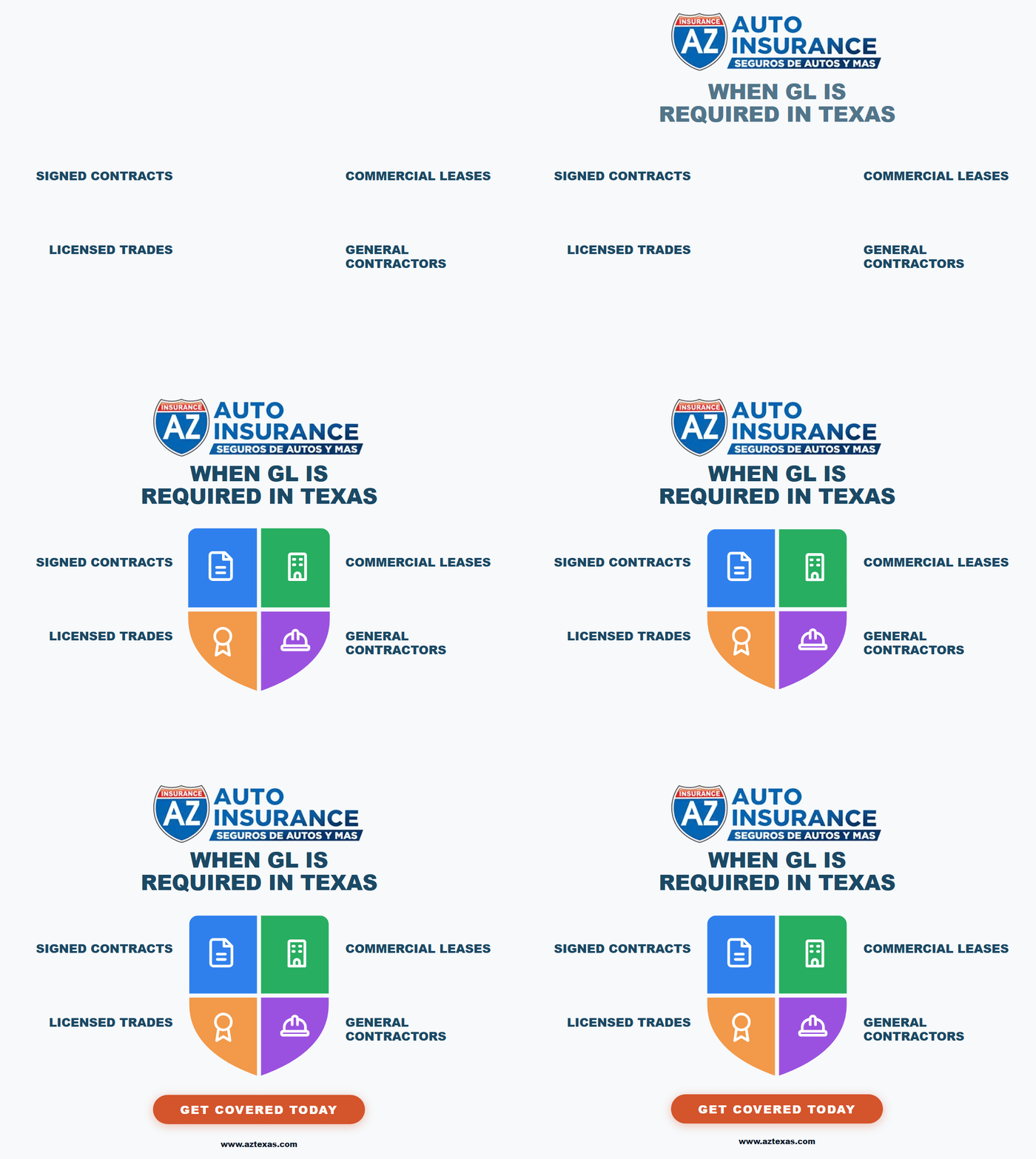
When General Liability Becomes Required Anyway
Even without a state mandate, general liability turns into a hard requirement in the situations Houston businesses run into every week. Here is who asks, and why.
Situation | Who requires it | Why |
|---|---|---|
Working for a general contractor | The GC and the project owner | No coverage, no site access, regardless of your skill |
Signing a commercial lease | The landlord or property manager | Protects the property and names them as additional insured |
Bidding public or government work | The city, county, or agency | Standard procurement requirement on nearly every contract |
Joining a vendor or client portal | The hiring company | Automated systems reject you without a current certificate |
Holding a licensed trade | The state licensing board | Mandatory to issue and keep the license |
In each of these, the request usually comes the same way: send us your certificate of insurance. A certificate of insurance is the one page proof that your policy is active, and it is what unlocks the job, the lease, or the contract.
Licensed Trades That Must Carry It
For some trades, general liability is not just a client preference, it is a condition of the license itself. The Texas Department of Licensing and Regulation requires certain contractors to carry commercial general liability to issue and renew their license. Electrical contractors, for example, must maintain general liability coverage on file to keep an active contractor license.
If you hold or are applying for a state trade license, check your specific requirement before you assume you are exempt. Air conditioning and refrigeration contractors, electricians, and several other regulated trades fall into this group. For independent workers wondering how this applies to solo operations, our guide on whether 1099 contractors need general liability insurance in Texas covers the licensed trade rules in more detail.
What Happens If You Skip It
The risk of going without is simple and expensive. Picture a common Houston scenario. You are remodeling a bathroom, you nick a water line, and a slow leak behind the wall becomes an $18,000 repair by the time anyone notices. Without general liability, that bill is yours. If the homeowner sues, the attorney fees are yours too.
The U.S. Small Business Administration notes that general liability protects a business against financial loss from bodily injury, property damage, medical expenses, and the cost of defending lawsuits, settlements, and judgments, and it recommends the coverage for businesses of every size, including solo operators. Skipping it does not save you money, it just moves the entire risk onto your own bank account.
What General Liability Covers and Does Not Cover
Knowing the line between what this policy does and does not do keeps you from buying the wrong protection.
Covered | Not covered |
|---|---|
Third party bodily injury you cause | Your own injuries |
Property damage you cause to others | Your own tools and equipment |
Your legal defense, settlements, judgments | Your own faulty workmanship |
Advertising injury claims | Employee injuries (needs workers comp) |
Products and completed operations claims | Damage from your business vehicle |
Because general liability leaves your own property, vehicles, and employees out, most businesses pair it with other coverage. Crews add workers compensation insurance, anyone running a truck adds commercial auto insurance, and owners with equipment or inventory add commercial property, often bundled into a business owner policy. For the full breakdown of the policy itself, see our guide on what general liability insurance covers for a business.
Frequently Asked Questions
Q: Is general liability insurance legally required in Texas?
No. Texas has no blanket law requiring most businesses to carry general liability insurance to operate. The Texas Department of Insurance regulates the coverage but does not mandate that you buy it. In practice, contracts, leases, and licensed trades make it required anyway.
Q: Who will ask me for proof of general liability?
General contractors, project owners, commercial landlords, city and county agencies bidding public work, and client or vendor portals. Most ask for a certificate of insurance before you can start, sign, or get paid.
Q: Do I need general liability if I am a solo contractor with no employees?
The state does not force it on a solo operator, but your clients and licensing board often do, and one claim without it can end your business. See our guide on whether 1099 contractors need general liability insurance for the full picture.
Q: How much does general liability cost if I do need it?
Most Houston small businesses pay about $42 to $150 per month in 2026, and contractors pay more. Our guide on how much general liability insurance costs in Houston breaks the ranges down by trade.
Q: Can I get a certificate of insurance the same day?
Often yes. A short call gets you quoted, and once you bind coverage we can issue your certificate of insurance the same day so a waiting job, lease, or contract does not stall.
Q: Does general liability cover my employees or my tools?
No. It covers third party injury and property damage you cause, plus your legal defense. Employee injuries need workers compensation, and your own tools and equipment need commercial property coverage.
Related Articles
Reviewed by A-Z Insurance Agency, licensed in Texas, serving Houston since 2003.
A client asks for proof of insurance, a landlord will not hand over the keys without it, or a general contractor says you cannot step on the site until you send a certificate. Suddenly you are wondering whether Texas law actually forces you to carry general liability, or whether everyone is just asking. Since 2003, A-Z Insurance Agency has walked thousands of Houston business owners through this exact question, so here is the straight answer.
Quick Answer: No, Texas has no blanket law requiring most businesses to carry general liability insurance. In practice it is close to mandatory anyway, because client contracts, commercial leases, general contractors, vendor portals, and certain licensed trades all require proof of coverage before you can work, sign, or keep your license.
Key Takeaways
Texas does not legally require most businesses to carry general liability insurance as a condition of operating.
The Texas Department of Insurance regulates the coverage but does not mandate that you buy it.
Contracts, commercial leases, general contractors, and vendor portals routinely require it before you start.
Some licensed trades, including electrical and air conditioning contractors, must carry it to keep a state license active.
Without it, any injury or property damage claim, plus the legal defense, comes straight out of your own pocket.
Getting covered is fast, and you can often walk away with a certificate of insurance the same day.
In This Guide
Does Texas law require general liability?
When general liability becomes required anyway
Licensed trades that must carry it
What happens if you skip it
What general liability covers and does not cover
Frequently asked questions
Does Texas Law Require General Liability?
The short answer is no. Texas has no blanket state law that forces most businesses to carry general liability insurance simply to operate. The Texas Department of Insurance sets the standards that commercial general liability policies follow, but it does not require you to buy one to do business in the state.
That surprises a lot of owners, because it feels required. The reason it feels that way is that almost everyone you work with makes it required, even though the state does not. What the law leaves optional, the market treats as the cost of doing business.
There is an important difference here from auto insurance. Texas does require liability coverage to drive a car legally. It does not extend that same mandate to running a business. If you are sorting out which policies the law forces on you versus which ones the people around you force on you, our guide on the difference between personal and commercial insurance is a good place to start.
When General Liability Becomes Required Anyway
Even without a state mandate, general liability turns into a hard requirement in the situations Houston businesses run into every week. Here is who asks, and why.
Situation | Who requires it | Why |
|---|---|---|
Working for a general contractor | The GC and the project owner | No coverage, no site access, regardless of your skill |
Signing a commercial lease | The landlord or property manager | Protects the property and names them as additional insured |
Bidding public or government work | The city, county, or agency | Standard procurement requirement on nearly every contract |
Joining a vendor or client portal | The hiring company | Automated systems reject you without a current certificate |
Holding a licensed trade | The state licensing board | Mandatory to issue and keep the license |
In each of these, the request usually comes the same way: send us your certificate of insurance. A certificate of insurance is the one page proof that your policy is active, and it is what unlocks the job, the lease, or the contract.
Licensed Trades That Must Carry It
For some trades, general liability is not just a client preference, it is a condition of the license itself. The Texas Department of Licensing and Regulation requires certain contractors to carry commercial general liability to issue and renew their license. Electrical contractors, for example, must maintain general liability coverage on file to keep an active contractor license.
If you hold or are applying for a state trade license, check your specific requirement before you assume you are exempt. Air conditioning and refrigeration contractors, electricians, and several other regulated trades fall into this group. For independent workers wondering how this applies to solo operations, our guide on whether 1099 contractors need general liability insurance in Texas covers the licensed trade rules in more detail.
What Happens If You Skip It
The risk of going without is simple and expensive. Picture a common Houston scenario. You are remodeling a bathroom, you nick a water line, and a slow leak behind the wall becomes an $18,000 repair by the time anyone notices. Without general liability, that bill is yours. If the homeowner sues, the attorney fees are yours too.
The U.S. Small Business Administration notes that general liability protects a business against financial loss from bodily injury, property damage, medical expenses, and the cost of defending lawsuits, settlements, and judgments, and it recommends the coverage for businesses of every size, including solo operators. Skipping it does not save you money, it just moves the entire risk onto your own bank account.
What General Liability Covers and Does Not Cover
Knowing the line between what this policy does and does not do keeps you from buying the wrong protection.
Covered | Not covered |
|---|---|
Third party bodily injury you cause | Your own injuries |
Property damage you cause to others | Your own tools and equipment |
Your legal defense, settlements, judgments | Your own faulty workmanship |
Advertising injury claims | Employee injuries (needs workers comp) |
Products and completed operations claims | Damage from your business vehicle |
Because general liability leaves your own property, vehicles, and employees out, most businesses pair it with other coverage. Crews add workers compensation insurance, anyone running a truck adds commercial auto insurance, and owners with equipment or inventory add commercial property, often bundled into a business owner policy. For the full breakdown of the policy itself, see our guide on what general liability insurance covers for a business.
Frequently Asked Questions
Q: Is general liability insurance legally required in Texas?
No. Texas has no blanket law requiring most businesses to carry general liability insurance to operate. The Texas Department of Insurance regulates the coverage but does not mandate that you buy it. In practice, contracts, leases, and licensed trades make it required anyway.
Q: Who will ask me for proof of general liability?
General contractors, project owners, commercial landlords, city and county agencies bidding public work, and client or vendor portals. Most ask for a certificate of insurance before you can start, sign, or get paid.
Q: Do I need general liability if I am a solo contractor with no employees?
The state does not force it on a solo operator, but your clients and licensing board often do, and one claim without it can end your business. See our guide on whether 1099 contractors need general liability insurance for the full picture.
Q: How much does general liability cost if I do need it?
Most Houston small businesses pay about $42 to $150 per month in 2026, and contractors pay more. Our guide on how much general liability insurance costs in Houston breaks the ranges down by trade.
Q: Can I get a certificate of insurance the same day?
Often yes. A short call gets you quoted, and once you bind coverage we can issue your certificate of insurance the same day so a waiting job, lease, or contract does not stall.
Q: Does general liability cover my employees or my tools?
No. It covers third party injury and property damage you cause, plus your legal defense. Employee injuries need workers compensation, and your own tools and equipment need commercial property coverage.
Related Articles
Latest Blogs

Is Texas Minimum Car Insurance Enough? What 30/60/25 Actually Pays After a Crash

Texas SR-22 After a DWI: How to Reinstate Your License

Hit by an Uninsured Driver in Texas? The Coverage You May Have Turned Down Without Knowing

How Much Does Umbrella Insurance Cost in Texas?

Does Homeowners Insurance Cover Foundation Damage in Texas? What Pays, What Does Not, and the Endorsement to Ask For

How to Read Your Texas Home Insurance Declarations Page, Line by Line
Let A-Z Auto Insurance Help You Find Affordable Coverage
Connect with our experienced team today & get reliable, affordable insurance designed around your needs.
Contact Us!
Let A-Z Auto Insurance Help
You Find Affordable Coverage
Connect with our experienced team today & get reliable, affordable insurance designed around your needs.
Contact Us!
Let A-Z Auto
Insurance Help You
Find Affordable Coverage
Connect with our experienced team today & get reliable, affordable insurance designed around your needs.
Contact Us!
Let A-Z Auto Insurance Help
You Find Affordable Coverage
Connect with our experienced team today & get reliable, affordable insurance designed around your needs.
Contact Us!
Latest New & Blogs
Latest New & Blogs
Related Blog Posts
Related Blog Posts
Hit by an Uninsured Driver in Texas? The Coverage You May Have Turned Down Without Knowing
About 1 in 8 Texas drivers is uninsured. UM/UIM and PIP are on every Texas policy unless someone rejected them in writing. Here is how to check yours.
Hit by an Uninsured Driver in Texas? The Coverage You May Have Turned Down Without Knowing
About 1 in 8 Texas drivers is uninsured. UM/UIM and PIP are on every Texas policy unless someone rejected them in writing. Here is how to check yours.
Hit by an Uninsured Driver in Texas? The Coverage You May Have Turned Down Without Knowing
About 1 in 8 Texas drivers is uninsured. UM/UIM and PIP are on every Texas policy unless someone rejected them in writing. Here is how to check yours.
How Much Does Umbrella Insurance Cost in Texas?
How much does an umbrella policy cost? See average umbrella insurance rates by limit, what drives the price, and how Texans can save. Get a quote today.
How Much Does Umbrella Insurance Cost in Texas?
How much does an umbrella policy cost? See average umbrella insurance rates by limit, what drives the price, and how Texans can save. Get a quote today.
How Much Does Umbrella Insurance Cost in Texas?
How much does an umbrella policy cost? See average umbrella insurance rates by limit, what drives the price, and how Texans can save. Get a quote today.
Does Homeowners Insurance Cover Foundation Damage in Texas? What Pays, What Does Not, and the Endorsement to Ask For
Settling from dry clay soil is usually excluded. A plumbing leak under the slab can be covered, often only with a foundation endorsement. Here is how to check.
Does Homeowners Insurance Cover Foundation Damage in Texas? What Pays, What Does Not, and the Endorsement to Ask For
Settling from dry clay soil is usually excluded. A plumbing leak under the slab can be covered, often only with a foundation endorsement. Here is how to check.
Does Homeowners Insurance Cover Foundation Damage in Texas? What Pays, What Does Not, and the Endorsement to Ask For
Settling from dry clay soil is usually excluded. A plumbing leak under the slab can be covered, often only with a foundation endorsement. Here is how to check.
Hit by an Uninsured Driver in Texas? The Coverage You May Have Turned Down Without Knowing
About 1 in 8 Texas drivers is uninsured. UM/UIM and PIP are on every Texas policy unless someone rejected them in writing. Here is how to check yours.
How Much Does Umbrella Insurance Cost in Texas?
How much does an umbrella policy cost? See average umbrella insurance rates by limit, what drives the price, and how Texans can save. Get a quote today.